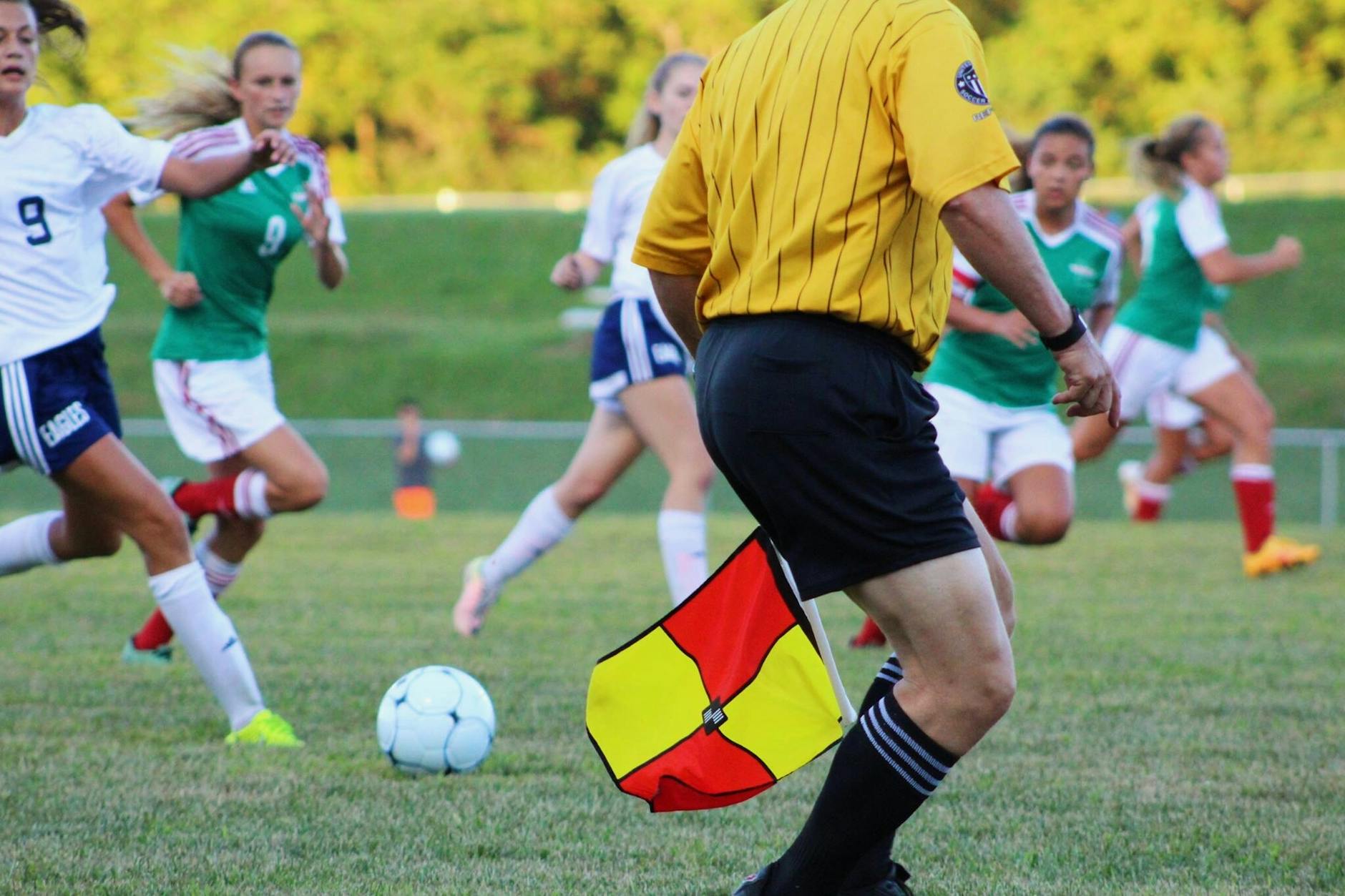
The handball rule in modern football has become more nuanced than the simple “no hands” guideline of old. Under the current interpretation by The International Football Association Board (IFAB) — adopted in competitions like the Premier League — not every touch of the ball by a hand or arm counts as a foul.

✅ Key Points in the Rule
- A handball offence requires more than just the ball touching a player’s hand or arm. For a foul to be given, often the player must have deliberately moved the hand/arm toward the ball, or have made their body “unnaturally bigger” by positioning their arm in an unjustifiable way.
- Accidental contact — for example, when the ball ricochets off a player’s thigh and then deflects off their arm — may not be considered an offence, particularly if the contact is deemed unintentional and the arm is in a “natural position” relative to the player’s movement.
- If the contact is judged to occur just before or as a player scores, or directly influences the shot, it’s more likely to be penalised. But if there are other touches or phases between the contact and the goal — or if the arm contact is judged accidental with no deliberate movement — referees and VAR are often instructed to let play stand.
Because of these interpretations, what looks to many fans like a clear handball — especially in chaotic goalmouth scrambles — can be ruled properly under the law as legal play.
What Happened at West Ham vs Brighton — And Why No Handball Was Called
In Sunday’s match, Brighton’s equaliser came in stoppage time. As the ball flew into the West Ham penalty area, it reportedly struck an opponent, then bounced off Brighton’s Georginio Rutter — off his thigh, then his arm — before Rutter shot past the keeper.
The question from many West Ham players, staff, and fans: “Wasn’t that handball?”
But the match officials — after a VAR check — judged that:
- Rutter’s arm was in a “natural position,” not artificially enlarged or extended.
- The contact was not deemed deliberate — the ball hit his thigh first, and the arm contact was accidental.
- There were other touches and phases before he scored, meaning the arm touch was not directly preparatory to the goal.
Because of those factors, under the current interpretation of the law, no handball offence was deemed to have occurred — and the goal stood.
That decision, while painful for West Ham, appears consistent with how the law is now applied.
Why This Decision Is So Crucial — Especially for West Ham’s Survival Hopes
For West Ham, every point matters. After taking the lead via Jarrod Bowen’s goal, they looked set to escape the relegation zone — a rare moment of hope amid a difficult season.
Had the equaliser been disallowed, West Ham would likely have taken all three points. That could have offered a vital cushion ahead of upcoming fixtures — a significant psychological and practical boost in their fight for survival.
Instead:
- They remain inside the relegation zone.
- They lose two potentially life-saving points.
- Confidence and momentum take a blow, especially in a situation where every point is a fight.
The frustration expressed by their coach and players — calling the decision “hard to take,” “clear handball,” “a major factor” — reflects the high stakes.
The Bigger Issue: Why So Many Fans Don’t Understand the Decision
The controversy reveals a broader truth: the handball law — and how it’s applied — is incredibly subtle, even for long-time fans.
- The difference between “deliberate handball” and “natural, accidental contact” can come down to split-second judgments.
- Physical context matters: was the arm in a natural position during a jump or challenge? Did the player move it toward the ball?
- VAR and referees often have to make gritty, judgement-based calls, not black-and-white decisions.
In other words — much of what feels like “common-sense” to a fan may not meet the legal criteria set out by IFAB. For that reason, many such incidents are ruled “not a foul,” even if they spark outrage.
Final Thoughts
The goal that denied West Ham three points was heartbreaking for the club — perhaps even pivotal in their relegation fight. But under today’s interpretation of the handball law, the decision was technically correct: accidental contact, natural arm position, no deliberate movement, and no direct hand-to-ball intent.
That doesn’t make it feel any less painful to West Ham supporters — and it doesn’t change the fact that, in the unforgiving world of the Premier League, margins like that can determine survival or relegation.
In the end, this incident highlights how a small, split-second moment — judged under subtle law interpretations — can have massive consequences for a club’s season.
Leave a Reply